Roof & Storm Leak Water Damage in Laguna Hills, CA
Wind-driven winter rain finds worn flashing and low-slope roofs. Laguna Hills crews tarp the entry, dry the attic and ceilings, and document the loss for your claim.
(949) 628-6827Get a local pro on the Laguna Hills line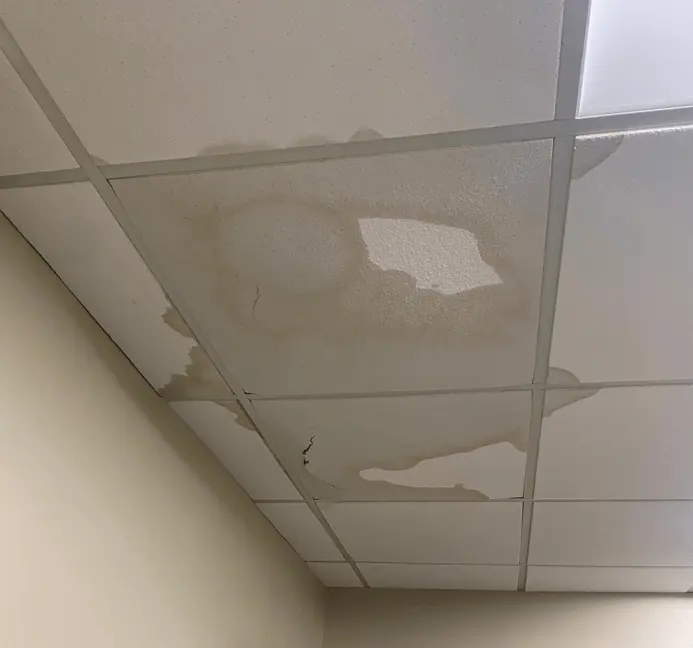
Why Laguna Hills calls 1st Step Restoration first
Rapid local response
The response team answers 24/7, and the nearest crew heads out the moment the call comes in, across Laguna Hills and the Saddleback Valley.
IICRC S500 drying standard
Trained crews with truck-mount extractors, air movers, and moisture meters dry to a verified standard, not a mop and a box fan.
Claim-ready documentation
The crew documents the loss with photos and daily moisture readings, the paperwork an adjuster needs to move a claim.
Saddleback Valley water experts
Hillside runoff, slab leaks in aging copper, pools, condos, and a humid marine layer, so the local pros know how water moves in an Orange County home.
What to do right now
A roof leak during a storm is about limiting the water until it can be stopped.
- Move furniture and electronics out from under the drip.
- Catch water in buckets and lay towels to slow the spread.
- Relieve a bulging ceiling safely if it is not near a fixture.
- Do not climb onto a wet roof in a storm.
- Call and let the restoration crew tarp the entry and dry the envelope.
What does roof and storm leak water damage cost in Laguna Hills, CA?
In Laguna Hills, CA, roof and storm leak water damage restoration typically runs $1,200 to $9,500, depending on how much water entered, how far it spread through the attic and ceilings, and how much drying and access is needed.
Single entry point
- Tarp and stop
- Attic and ceiling drying
- Localized access
Spread through the attic
- Wet insulation and ceilings
- Multi-room drying
- Full moisture mapping
Major storm loss
- Multiple entry points
- Extensive drying and access
- Documented repairs
How roof and storm leak water damage is handled in Laguna Hills, CA
Stop the water
Crews tarp or seal the entry point so no more water enters while the storm continues.
Map the spread
Crews trace how far the water traveled through the attic, insulation, and ceilings with moisture meters.
Dry the envelope
Crews dry the attic, insulation, and ceiling cavities to a verified reading with airflow and dehumidification.
Document and coordinate
Crews document the loss for your carrier and coordinate the roof repair.
A roof and storm leak is water entering through the roof envelope, the tile, flashing, and low-slope sections that take the brunt of a wind-driven Laguna Hills winter storm. Stopping the entry point comes first, because the attic and ceilings keep soaking until it does.
Why storm leaks hit Saddleback Valley roofs
Laguna Hills gets most of its rain in a handful of intense winter storms, often driven sideways by wind. That is when older roofs give up their weak points.
- Worn or lifted flashing around chimneys, vents, and valleys
- Cracked or slipped tile that lets wind-driven rain underneath
- Low-slope and flat sections that pond and back up
- Dried-out seals and pipe boots after years of sun
Track conditions with the National Weather Service flood safety before a storm, and see the Ready.gov flood guidance for how to prepare your home.
Storm leak coming through the ceiling? Move what you can and call. Crews tarp the entry and dry the attic. Local crews respond 24/7, day or night.
☎ Call (949) 628-6827Stop it, dry the envelope, document the loss
The restoration crews tarp or seal the entry so no more water enters, then dry the attic, insulation, and ceiling cavities to a verified reading. Crews document the storm entry point and the resulting damage so your insurance carrier has a clear record, and crews coordinate the roofer for the permanent repair.
Clear your gutters before the first storm
Most Laguna Hills storm leaks trace back to water that could not drain. Clearing gutters and valleys and checking flashing before winter keeps a heavy storm from finding its way into your attic in the first place.
From the Nellie Gail estates to the Laguna Woods line
Laguna Hills water damage pros respond across every Saddleback Valley ZIP, day or night.
Laguna Hills water damage pros cover the whole Saddleback Valley, from the Sheep Hills to the Laguna Woods line, day or night, with rapid local response.
Coverage runs across Laguna Hills, Laguna Woods, Aliso Viejo, Mission Viejo, Lake Forest, Laguna Niguel, and the Saddleback Valley.
See every neighborhood and ZIP coveredRelated restoration services
Roof & Storm Leak Water Damage questions, answered
Water in your home right now?
Do not wait for the FAQ. A Laguna Hills crew is standing by 24/7.
(949) 628-6827 Call nowCan you come out during the storm?
Yes. Crews respond 24/7, including during storms. Crews tarp or seal the entry point to stop more water from coming in, then dry once the source is controlled.
Do you repair the roof?
Crews stop the active leak with a tarp or seal and dry the damage, then coordinate a roofer for the permanent repair, so the drying and the fix move together.
Why do Laguna Hills roofs leak in winter?
The rain comes in concentrated, wind-driven winter storms that push water under tile, past worn flashing, and into low-slope sections. Older flashing and dried-out seals are the usual entry points.
Is the attic insulation ruined?
Wet insulation loses its value and holds moisture against the framing. Crews dry what crews can and replace insulation that stayed saturated, so the ceiling below dries properly.
Will insurance cover storm roof damage?
Sudden storm damage is generally covered, though wear and tear is not. Crews document the entry point and the resulting water damage and work with your carrier directly.
How is this different from a ceiling leak?
A roof and storm leak enters through the roof envelope. A ceiling leak comes from an interior source above the ceiling. Crews handle the interior version on its own page.
A Laguna Hills crew is standing by
Water sitting means damage spreading. Call 1st Step Restoration and a local crew heads out across the Saddleback Valley, day or night.
(949) 628-6827One call starts the dry-out